🚗 Transforming the Automotive Service Industry With Innovative Software Solutions
Powered by Soft The Next
The automotive industry, a cornerstone of modern society, continues to evolve at a rapid pace, driven by technological advancements, shifting consumer preferences, and regulatory changes. As vehicles become more sophisticated, connected, and autonomous, the automotive service, repair, and maintenance landscape is also undergoing a major transformation.
Today's automobile service providers face increasing pressure to:
- Deliver exceptional customer experiences
- Optimize operational efficiency
- Maintain profitability in a competitive marketplace
Technology has become indispensable in addressing these challenges.
🌐 The Growing Role of Technology in Automotive Services
Technology is revolutionizing the entire automotive service value chain through:
- Advanced diagnostic tools
- Predictive maintenance solutions
- Integrated CRM systems
- Digital service platforms
As the industry shifts toward connected, autonomous, electric, and shared mobility, technology continues to streamline operations, enhance communication, and improve service outcomes.
🛠️ Introducing Soft The Next
A leading software development company dedicated to empowering automobile service providers through innovative, scalable, and customer-focused solutions.
Soft The Next understands:
- The complexities of automotive service operations
- Evolving customer expectations
- Industry challenges and opportunities
Their software solutions are designed to:
- Drive operational excellence
- Enhance customer satisfaction
- Fuel sustainable business growth
⭐ Key Features & Benefits of Soft The Next Automobile Services Software
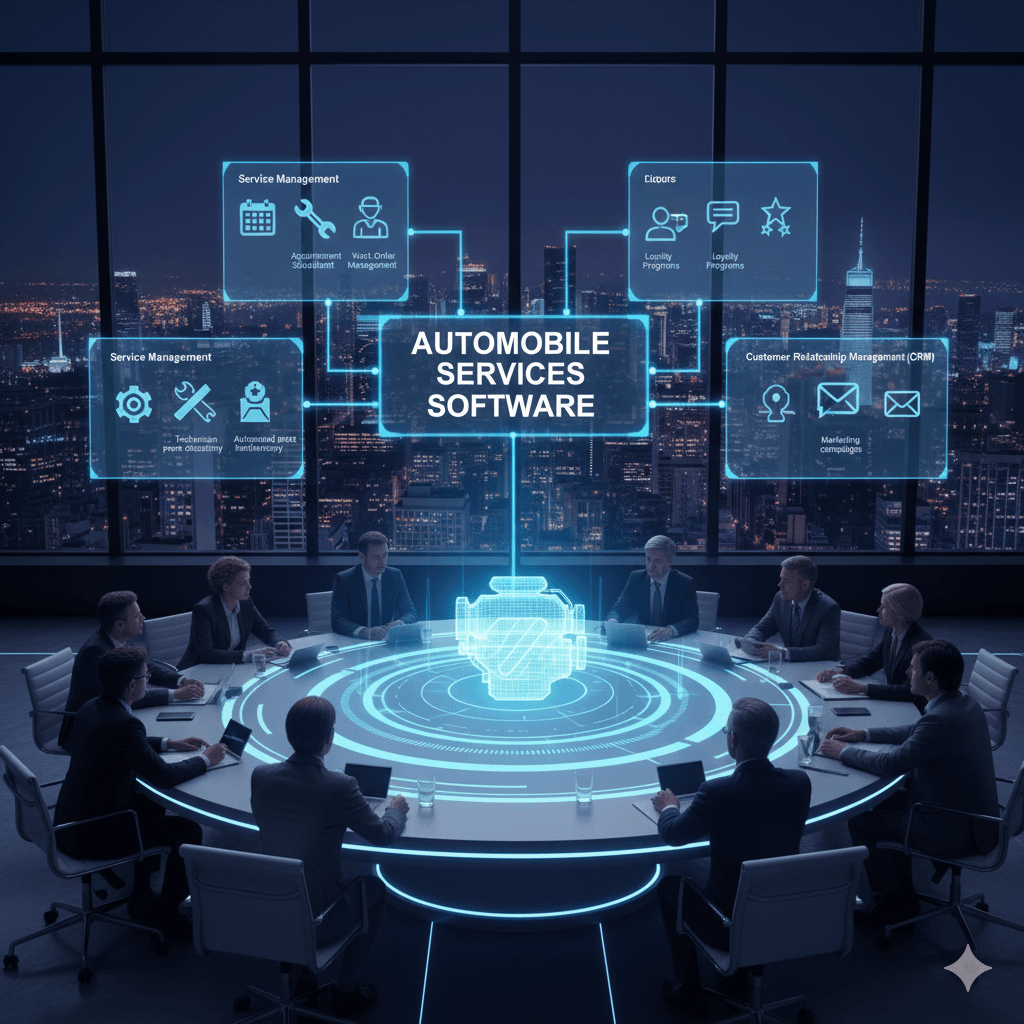
### 1. Service Management
✔ Streamlined Scheduling, Work Orders & Technician Dispatch
- Simplifies appointment scheduling
- Automates work order management
- Assigns and dispatches technicians efficiently
- Reduces administrative overhead
- Minimizes wait times and improves service delivery
✔ Automated Parts Inventory & Procurement
- Tracks parts usage in real-time
- Maintains optimal stock levels
- Integrates with suppliers
- Streamlines procurement workflows
- Reduces downtime and enhances profitability
### 2. Customer Relationship Management (CRM)
✔ Comprehensive Customer Profiles
Maintain detailed customer data such as:
- Contact information
- Service history
- Preferences
- Feedback
This enables personalized interactions and builds loyalty.
✔ Targeted Marketing & Loyalty Programs
- Segment customers based on behavior
- Run targeted promotions
- Implement loyalty programs
- Increase repeat visits & referrals
- Maximize customer lifetime value
🤝 Our Commitment to You
At Soft The Next, we are committed to building long-term partnerships by:
- Understanding your unique business challenges
- Delivering tailored software solutions
- Offering continuous support & transparent communication
- Ensuring maximum value throughout your digital transformation journey
Our customer-centric approach ensures that you always receive innovative, secure, scalable, and future-ready solutions.
What is automotive service management software?
Automotive service management software helps service centers manage appointments, work orders, technician assignments, parts inventory, and customer interactions all in one platform.
How does Soft The Next improve service efficiency?
By automating scheduling, inventory, CRM, and workflow operations, Soft The Next reduces manual tasks, minimizes errors, and speeds up service delivery.
Can this software help with customer retention?
Yes. With built-in CRM tools, personalized communication, service reminders, and loyalty programs, the software helps increase customer satisfaction and repeat visits.
Does the software support inventory management?
Absolutely. It tracks stock levels, automates procurement, and integrates with suppliers to ensure timely availability of parts.
Is the system suitable for multi-branch service centers?
Yes. The platform is scalable and can support single garages, multi-location franchises, and enterprise-level service networks.